
Exercise After Concussion: Why Light Aerobic Activity Should Be Part of Rehab
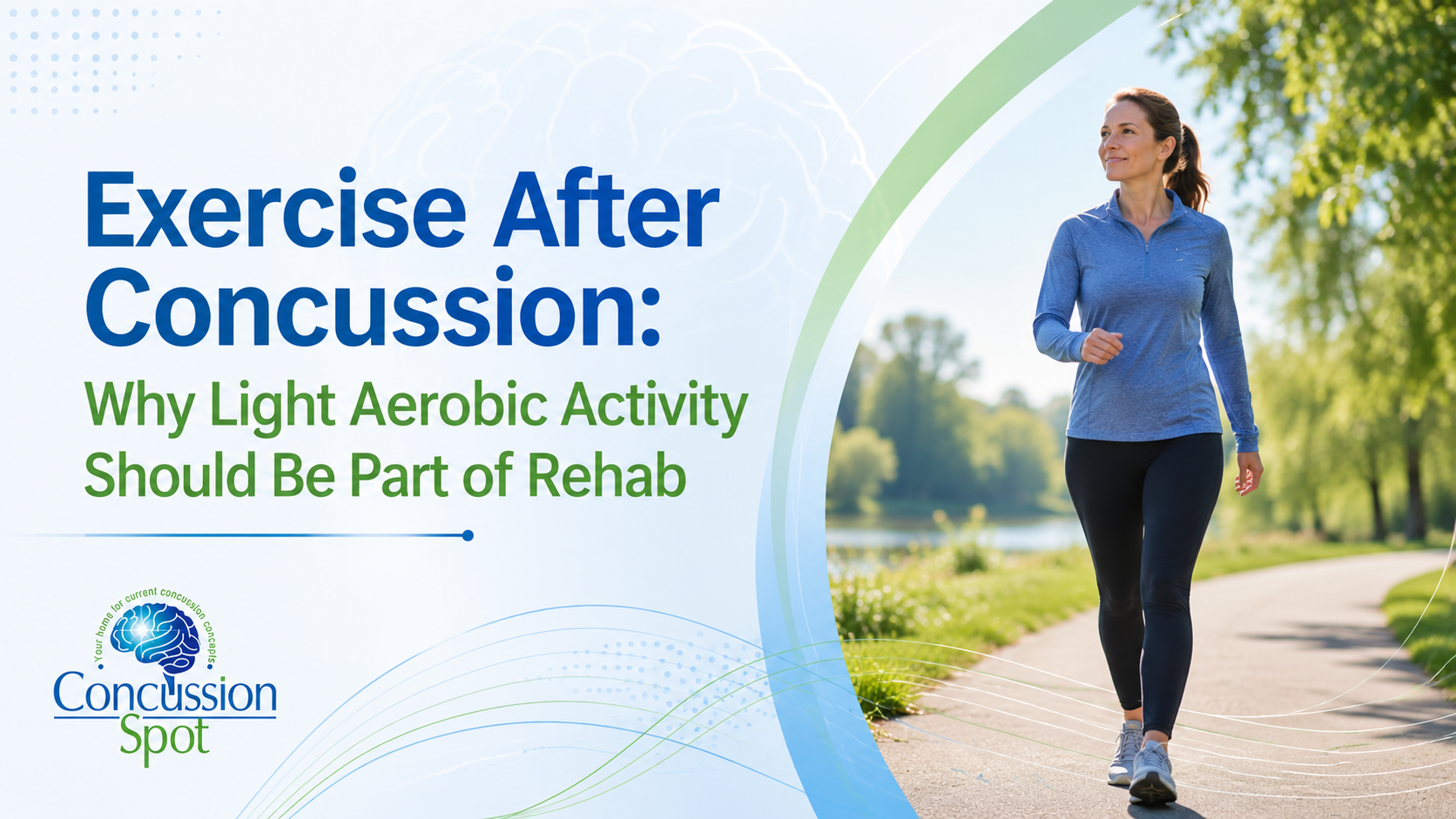
One of the biggest shifts in concussion care over the last several years is how clinicians think about exercise.
For a long time, patients were often told to rest until their symptoms went away. While rest still has an important role early after injury, prolonged rest is no longer considered the best approach for most patients recovering from concussion.
In fact, when used appropriately, light aerobic exercise can be one of the most helpful tools in the concussion rehabilitation process.
The key phrase is: when used appropriately.
Exercise after concussion is not about pushing through symptoms, rushing return to sport, or testing a patient’s toughness. It is about using the right intensity, at the right time, with the right progression.
For clinicians, this means aerobic activity should be viewed less as general fitness and more as a targeted rehabilitation strategy.
Start With Relative Rest
During the first 24 to 48 hours after a concussion, the goal is typically relative rest.
This does not mean complete bed rest. Patients do not need to be isolated in a dark room with no activity. In most cases, they can still get up, move around the house, eat meals, complete basic daily activities, and take short walks as tolerated.
However, this early window is usually not the time for formal exercise, conditioning, hard workouts, or return-to-play training.
The goal is to reduce unnecessary symptom provocation while avoiding complete inactivity.
After the first couple of days, light aerobic activity can often be introduced if tolerated. This may include walking, stationary biking, or another simple activity that gently raises the patient’s heart rate without significantly worsening symptoms.
Use the “Conversation Pace” Rule
A helpful way to explain light aerobic activity to patients is the “conversation pace” rule.
If the patient can exercise while still comfortably holding a conversation, the intensity is likely appropriate. If they are gasping, struggling, or feeling like they are training hard, the intensity is probably too high.
This simple explanation gives patients a practical way to self-monitor intensity without needing advanced equipment.
A common starting point is around 20 minutes of light aerobic exercise per day, as long as symptoms remain controlled. The exact dose should be individualized based on the patient’s presentation, symptom response, and clinical exam findings.
Symptom Monitoring Matters
Symptom monitoring is one of the most important parts of prescribing exercise after concussion.
A mild increase in symptoms is not automatically dangerous. For many patients, an increase of about 1 to 2 points on a 10-point symptom scale may be acceptable if symptoms remain manageable and return back to baseline relatively quickly.
However, if symptoms increase more significantly, or if they do not return to baseline within about an hour after exercise, the intensity was likely too high.
This gives patients and clinicians a simple framework:
Exercise should lightly challenge the system, not create a major symptom flare.
That distinction matters. Patients often fall into one of two patterns. Some are afraid to move and significantly under-dose activity. Others feel okay at rest and assume they are ready to return to full workouts or sport too quickly.
The right answer is usually somewhere in the middle.
Why Exercise Intolerance Happens After Concussion
One reason aerobic exercise matters after concussion is that concussion can affect autonomic regulation.
Some patients develop exertional intolerance, meaning symptoms increase when heart rate rises. This can show up as headache, dizziness, lightheadedness, fatigue, light sensitivity, noise sensitivity, or a general sense that the brain and body are not regulating well.
This is where structured exertion testing can be extremely valuable.
Once the patient is beyond the initial 24 to 48 hour window, exertion testing with a trained healthcare professional can help determine whether the patient has exercise intolerance and identify an appropriate heart rate zone for recovery.
This is much better than guessing.
Without objective testing, a patient may either avoid activity unnecessarily or push beyond their current threshold. A structured approach helps clinicians prescribe exercise with more precision and confidence.
Exercise Is Part of Rehabilitation
Aerobic exercise after concussion should not be viewed only as a fitness intervention. When dosed correctly, it can become part of the rehabilitation process.
Light aerobic activity may help create a better recovery environment by supporting blood flow regulation, improving sleep quality, helping regulate mood and anxiety, and promoting neuroplasticity.
This is why clinicians should feel comfortable discussing exercise early in the recovery process, while still emphasizing appropriate timing, intensity, and symptom response.
The clinical goal is not to push the patient harder. The goal is to find the right dose.
Enough activity to promote recovery.
Not so much that the system becomes overloaded.
Practical Clinical Takeaways
For clinicians managing concussion recovery, here are five key principles:
Encourage relative rest for the first 24 to 48 hours after concussion.
After the first couple of days, introduce light aerobic activity as tolerated.
Keep intensity low enough that the patient could comfortably hold a conversation.
Monitor symptoms carefully and keep increases mild and short-lived.
Use exertion testing when appropriate to prescribe exercise more precisely instead of relying on guesswork.
Bottom Line
Exercise after concussion should not be feared, but it should be guided.
When clinicians prescribe aerobic exercise with the right timing, intensity, and progression, it can become one of the most practical and powerful tools in the concussion rehabilitation process.
For patients, this means exercise is not about pushing through symptoms.
For clinicians, it means exercise prescription should be intentional, symptom-informed, and individualized.
If you want a practical resource you can use with patients right away, download the Light Aerobic Exercise After Concussion handout here.
And if you want a deeper clinical framework for concussion evaluation, exertion testing, vestibular and ocular rehabilitation, cervical considerations, and return-to-activity planning, check out the Comprehensive Concussion Rehabilitation: Evaluation & Treatment course through Concussion Spot Education here.